
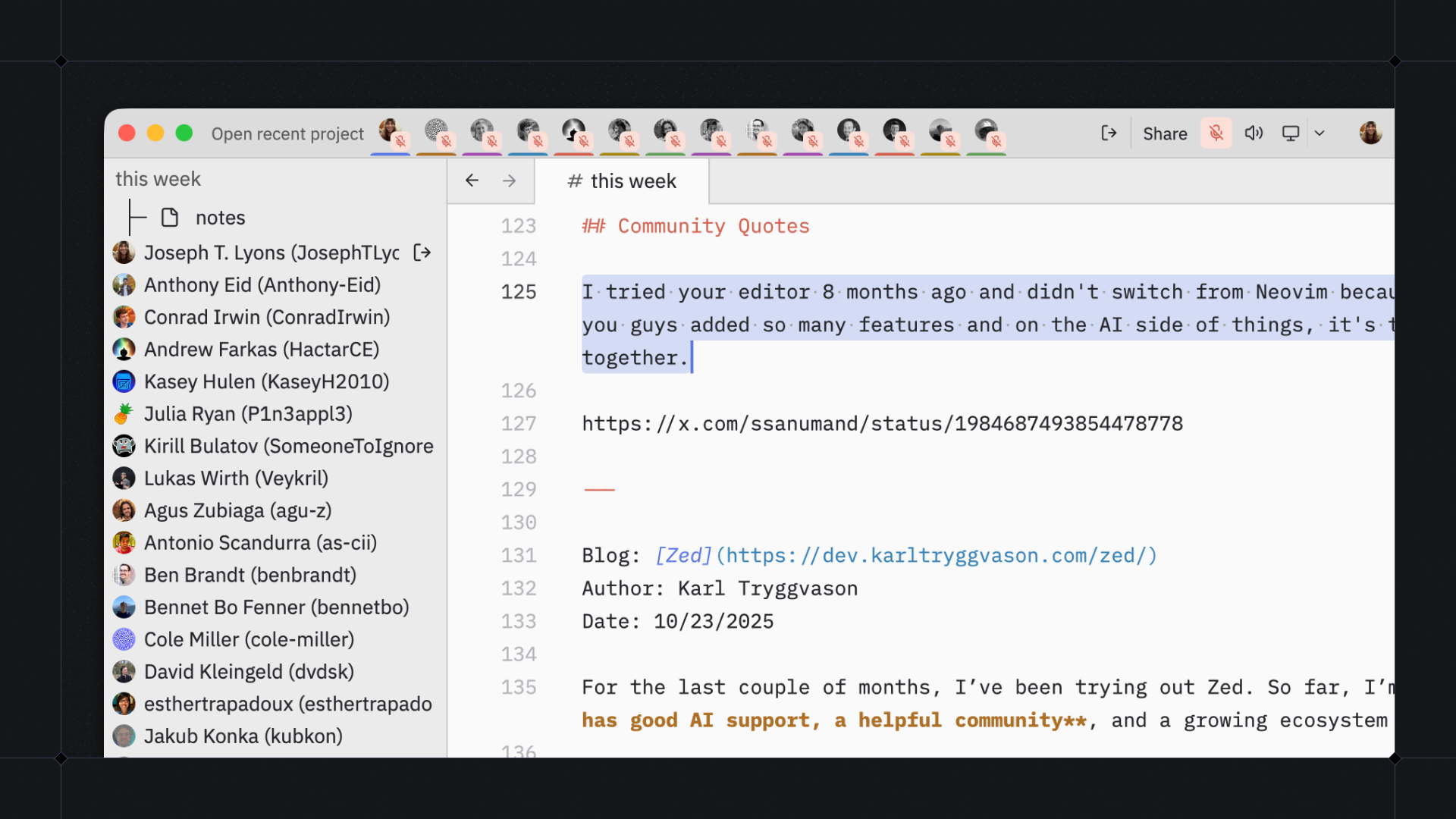
**Zed Industries: Reinventing Collaborative Software Development from the Ground Up**
Every Monday at noon Eastern Time, the team at Zed Industries comes together for their weekly all-hands meeting. But unlike most tech companies, where such gatherings are scattered across video calls and scattered docs, Zed’s entire workflow—from scheduling to note-taking to live discussions—happens inside their own product: Zed, a next-generation collaborative code editor. This unique setup is not just a demonstration of their technology; it’s a reflection of the company’s core mission—to build the ultimate environment for collaborative software development.
### A Vision Rooted in Seamless Collaboration
The inspiration for Zed’s collaborative focus goes back to co-founder Nathan’s early experience at Pivotal Labs, where pair programming with two keyboards plugged into one computer was the norm. The goal for Zed was to recreate that effortless, in-person coding experience for distributed teams working remotely around the world.
Zed’s founders are no strangers to collaborative editing. They previously developed the Teletype package for Atom, which allowed developers to share “portals” into their workspaces—an early step toward real-time code collaboration. However, Atom’s Electron-based architecture never reached the performance or fluidity the team envisioned. As Atom was sunset by GitHub, Nathan shifted focus to building Zed from scratch, using a GPU-accelerated UI framework written in Rust to ensure speed and responsiveness.
### Why Other Tools Fall Short
While collaborative features exist in other editors, they often require cumbersome setup: installing extra extensions, copying and pasting links, and struggling with unreliable merge conflicts when multiple people edit the same code. Performance frequently suffers as more collaborators join, and many teams end up reverting to screen sharing through platforms like Zoom or Slack for real collaboration.
Zed set out to solve these problems at the architectural level. Built from the ground up for collaboration, Zed leverages CRDTs (Conflict-Free Replicated Data Types) for its core data structure, allowing real-time, conflict-free merging of code changes by multiple users. Whether teammates are in the same office or on different continents, everyone’s edits are seamlessly integrated and the editor remains fast and responsive—even during “mob programming” sessions with many contributors.
Setup is designed to be frictionless: there’s no need for extensions or session links—just sign in with your GitHub handle. Zed also includes built-in audio communication and automatic screen sharing, eliminating the need for external tools when the team needs to discuss something outside the editor.
### Collaboration as a Way of Working
For Zed Industries, collaboration isn’t just a feature—it’s the operating system for their company. Their internal organization reflects this philosophy, with a “channel tree” structure that adapts to different kinds of work. Some channels are dedicated to recurring meetings, like the weekly “this week” channel for planning, or the bi-monthly “retrospectives” channel where staff reflect on successes and areas for